
Kissimmee Previous Residents by Era
No single roll identifies every person attached to a Kissimmee address. Property and deed records establish ownership, while directories, census schedules, newspapers, and probate may establish occupancy or family ties. The best source therefore depends on the date. Start with the newest reliable fact and work backward without treating an owner as a resident.
| Source | Years It Covers | Where Held | What It Shows |
|---|---|---|---|
| Official Records and archive | Some from 1882; paper holdings mostly 1887-2009 | Osceola Clerk, SearchNG, Records Center | Deeds, mortgages, liens, legal descriptions, and parties |
| Property tax roll | Current; certified downloads listed for 2021-2025 | Osceola Property Appraiser | Owner, situs, mailing address, sales pointers, and exemptions |
| Gazetteer and directory | 1887 and 1921 titles verified | UCF scan and holding-library research | Person, business, trade, or address snapshots where printed |
| Federal census | Public through 1950 | NARA and library databases | Household members at the enumeration date |
| Sanborn map | May 1889 verified | Library of Congress | Building footprint, use, construction context, and old street labels |
| Newspaper and probate | Availability varies | UF collections, Clerk, and Spence | Sales, deaths, heirs, representatives, and address changes |
For a recent house, open the parcel card and its deed reference first. For an early property, the legal description is more durable than the street number. The Property Appraiser search is the current anchor, while the Clerk, library, and archive provide the older layers.
Start a Kissimmee Address Trail
Search the physical, or situs, address in the Osceola Property Appraiser portal. Save the parcel or account number, current owners, owner mailing address, legal description, exemption flags, sales references, and year-built data. Situs means the land's location. The mailing address is where tax notices go, and it may belong to an owner who lives elsewhere.
A homestead flag can support owner-occupancy, but it never lists all past residents. Building facts can help bracket a construction date. They do not say who slept in the home. If the address merely uses “Kissimmee, FL,” check the parcel jurisdiction before requesting city permits because that postal label also reaches unincorporated Osceola County.
Note: Keep a dated source log so a later ownership update does not erase the path you followed.
Walk Osceola Deeds Backward
The Osceola Official Records SearchNG links a present parcel to older owners. A recorded party name shows a role in an instrument, not proof that the Clerk confirmed identity, title, or occupancy. Match the legal description at every turn.
- Copy the current owner's name, legal description, parcel number, and acquisition-deed reference from the parcel card.
- Open that deed by instrument number or book and page. Record the seller, or grantor, and the exact land description.
- Search that seller as a grantee to locate the deed by which the seller acquired the same land.
- Repeat while the parcel description remains consistent. Track splits, combined lots, and changed legal descriptions instead of relying on price alone.
- When the live portal ends, carry the citation to the historical index, Clerk request channel, or Records Center.
- Grantor and grantee
- The grantor transfers an interest; the grantee receives it.
- Chain of title
- The linked sequence of transfers for the same land.
- Legal description
- The lot, block, subdivision, or surveyed wording that identifies land even when a street label changes.
Recover Older Kissimmee Deed Citations
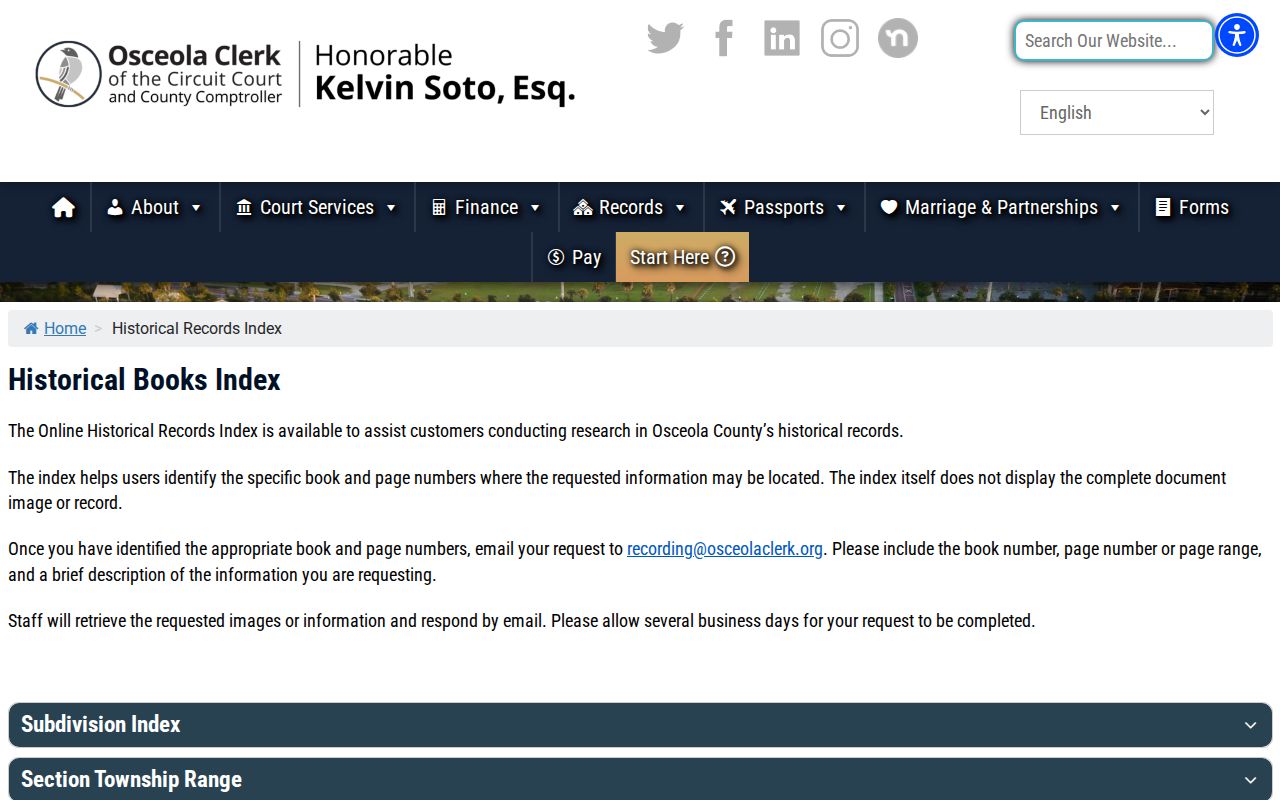
SearchNG does not publish a precise continuous image cutoff. The Clerk's Historical Records Index bridges part of that gap with subdivision indexes divided A-C, C-M, and N-Z, plus section-land, township-range, and subdivision or condominium plat microfilm references. The index may yield only book and page. That citation is still enough to request the instrument.
The historical index shows how older citations are organized.
Use the listed book and page in a narrow email, counter, mail, or public-record request. This insider route can identify an old transfer even when no deed image appears online.
Kissimmee Previous Residents Offline
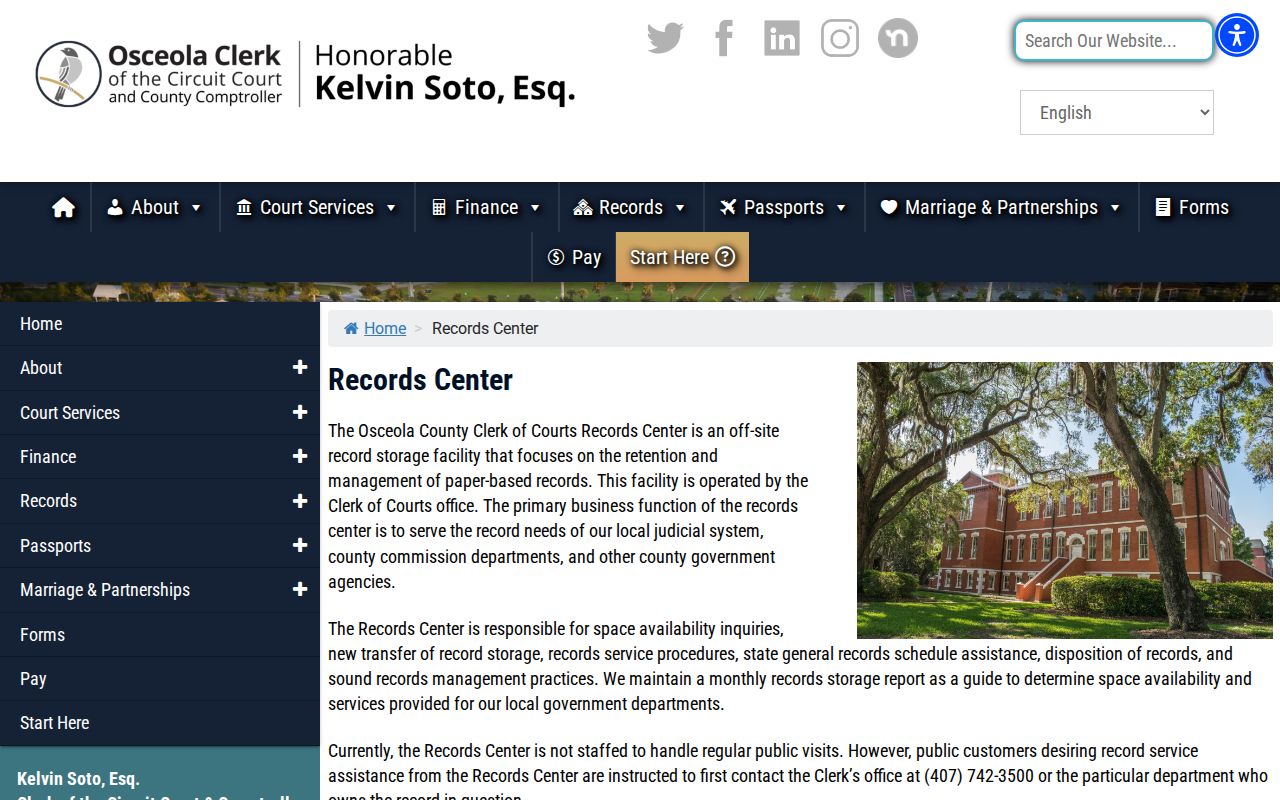
The Osceola Clerk Records Center holds some material dating to 1882 and mostly records from 1887 through 2009. It is not staffed for routine public visits. Call the Clerk or the office that owns the series, then provide a case number, instrument citation, party name, record type, and date range. The courthouse at 2 Courthouse Square handles counter access during weekday public hours, and JustFOIA is another route for items absent from PERCH.
The Records Center page explains the archival fallback.
The archive dates are not a promise that every series survives for every year. Ask for the named record series and let staff identify the storage location.
Map Early Kissimmee House History
The May 1889 Kissimmee Sanborn map supplies two public-domain sheets with building footprints, uses, construction clues, and street labels. It can show whether a structure stood on a lot near a deed date, but it cannot name the resident. Pair the map with the legal description and a directory or census entry.
County geography also changes the trail. Osceola County was created from Orange and Brevard in May 1887, and it lost territory when Okeechobee County was formed in 1917. For land or people near those breaks, search predecessor or successor county records. Early custody was modest: Major J. H. Allen even offered his dwelling and iron safe for the new county's records before the courthouse opened.
Match Kissimmee Past Households
Ownership is only half the answer to who lived here before. Kissimmee has two firmly verified directory anchors: an 1887 gazetteer that covers Kissimmee and a dedicated 1921 Polk city and county directory. A complete local criss-cross run has not been verified, so do not assume that every address appears year after year. The separate Kissimmee city directories page covers the collections in depth.
- Choose the directory closest to the target date and copy the entry exactly, including initials, trade, business, and address.
- Pair the 1921 directory with the 1920 census. Use nearby public census years for other proven directory dates.
- Compare household names, ages, relationships, and place with the deed owner's name. Do not force a match when facts conflict.
- Check nearby years, newspapers, probate, and cemetery records when a name disappears. Omission can also reflect a publication gap or move.
The digitized Kissimmee Gazette collection may add sales, social notices, obituaries, and business moves. Spence Research Center offers appointments and a $10 staff search for books, photographs, documents, limited family histories, and yearbooks.
Lawful use. Research previous residents for house history, genealogy, estate work, or personal curiosity. Never use an address trail to stalk, harass, or expose a protected person.
Close a Kissimmee Resident Trail
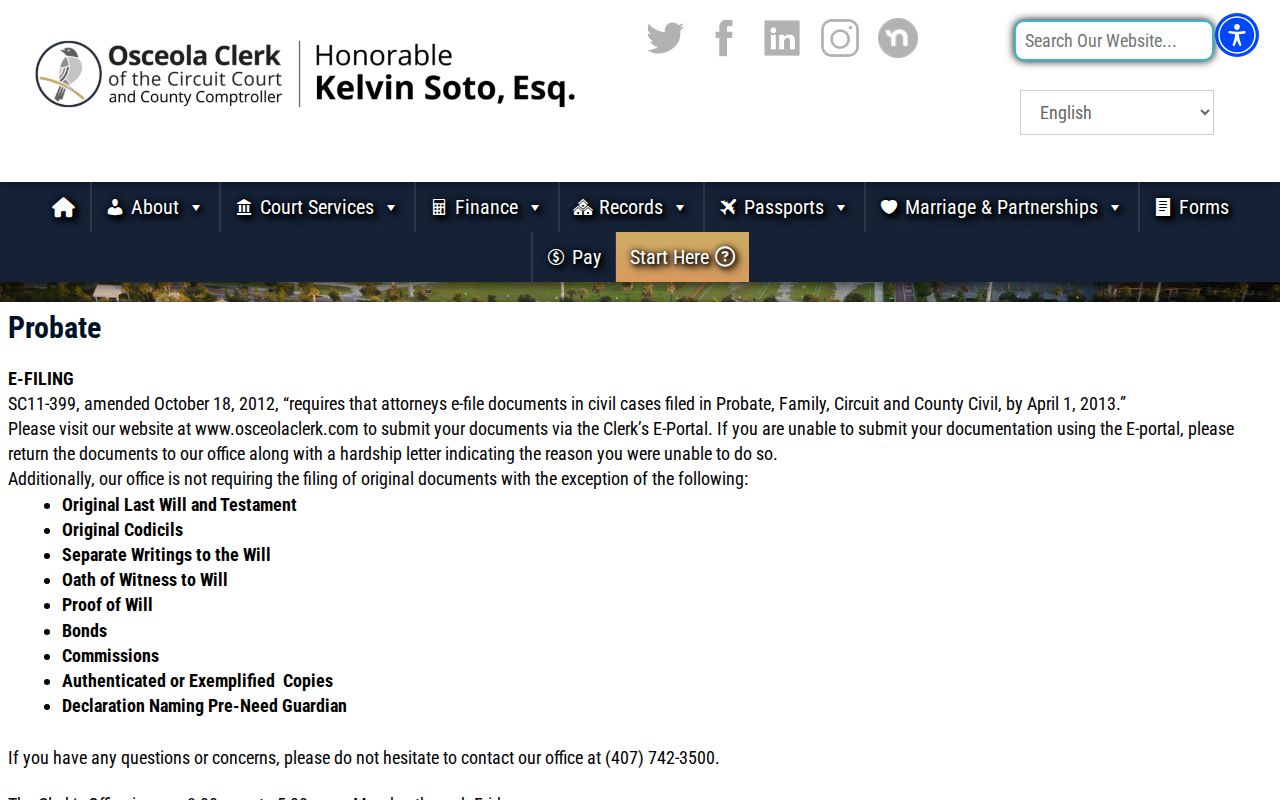
When an owner disappears from deeds or directories, probate and obituary evidence can explain the break. The Osceola Clerk probate channel may identify a decedent, personal representative, heirs or beneficiaries, and service addresses, subject to sealed records and redactions. Search the Clerk case index, then use counter or request access if a public document is not remote.
The Clerk's probate page identifies the local file route.
A probate service address may be stale, and an obituary is not a certified vital record. Confirm key dates through the proper custodian while keeping the deed, household, and death evidence as separate claims.